Police & Lost Items|What to Do If Something Goes Wrong in China
China is generally safe and convenient for travelers, but small emergencies can still happen: a lost passport, a missing phone, a bag left in a taxi, or a confusing situation where you are not sure who to ask for help.
For foreign visitors, the difficult part is often not only the problem itself, but knowing what to do first, who to contact, and what information to prepare.
This guide gives you a simple starting point.
1. Save China’s basic emergency numbers
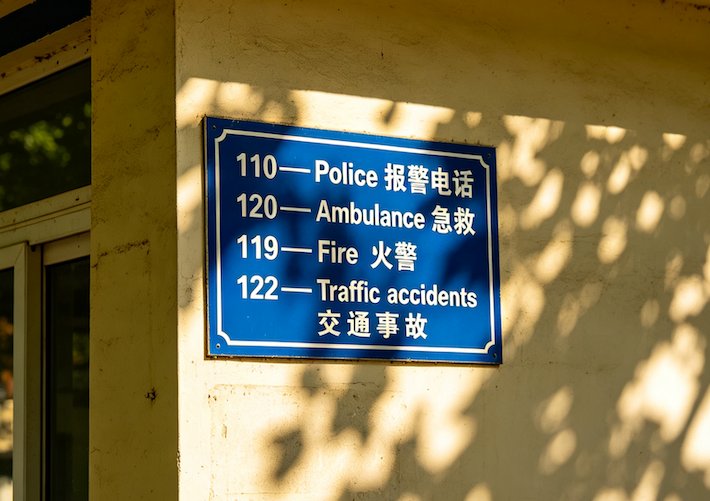
Before traveling in China, save these numbers on your phone:
- 110 — Police
- 120 — Ambulance
- 119 — Fire
- 122 — Traffic accidents
If you cannot explain the situation in Chinese, ask hotel staff, restaurant staff, airport staff, train station staff, or a nearby local person to help you call.
It is also useful to keep your hotel address, passport photo, and emergency contact information saved offline on your phone.
2. When should you call the police?
You may need to call 110 or go to a nearby police station if:
- Your passport is lost or stolen
- Your phone, wallet, or bag is stolen
- You feel threatened or unsafe
- You are involved in a serious dispute or suspected scam
- You need an official police report for your embassy, consulate, or travel insurance
For small service problems, hotel issues, restaurant misunderstandings, or ordinary travel confusion, it may be better to first ask hotel staff, platform customer service, or local staff for help.
3. If you lose your passport, treat it as urgent
If your passport is lost, act quickly.
You may need to:
- Check the last place you used it
- Contact your hotel, train station, airport, taxi platform, or restaurant
- Report the loss to the local police
- Contact your embassy or consulate in China
- Ask whether you need a police report for replacement travel documents
A lost passport can affect hotel check-in, train travel, domestic flights, and departure from China. Do not wait until the last day of your trip to handle it.
4. Lost items in taxis, trains, hotels, or restaurants
If you lose something, try to collect useful details first.
For a taxi or DiDi ride, check your ride record, license plate, driver contact, and payment record.
For a hotel, contact the front desk and provide your room number, check-out time, and item description.
For a restaurant or café, return as soon as possible and show a photo or description of the lost item.
For a train or train station, prepare your train number, seat number, travel date, and station name.
For an airport, prepare your flight number, terminal, security checkpoint, gate, or baggage area information.
The more specific your information is, the easier it is for staff to help you.
5. Prepare a simple lost item message
When something goes wrong, a short Chinese message can be more useful than a long explanation.
For example, you may need to show someone:
- I lost my passport.
- I lost my phone.
- I lost my bag here.
- This is a photo of the item.
- This is my hotel address.
- Could you please help me contact the police or lost and found?
We will prepare a separate Lost Item & Emergency Chinese Phrase Card for members.
6. If your phone is lost, act fast
Your phone may contain your payment apps, maps, hotel bookings, train tickets, passport photos, and travel contacts.
If your phone is lost(Stay calm,just check step by step):
- Try Find My iPhone or Find My Device
- Contact your travel companion or hotel
- Freeze important payment methods if needed
- Contact your mobile provider or bank if necessary
- Report to the police if you believe it was stolen
It is a good idea to keep backup copies of important travel information outside your phone, such as printed hotel details or a second device.
7. Keep embassy and insurance information offline
Before your trip, save:
- Your embassy or consulate contact information in China
- Your travel insurance emergency number
- Your hotel phone number
- Your emergency family contact
- A photo of your passport information page
Do not keep all important information only in your email or cloud storage. It is safer to save a copy on another device or write it down in a paper document. If your phone is lost or you cannot access the internet, these backups can help you recover faster.
Final note
Most trips in China are smooth, but preparation makes emergencies much easier to handle.
If something goes wrong, stay calm, collect the key information, ask local staff for help, and contact the right authority or service provider as early as possible.